


For over a year, the tech trade was simple: own the chips, sell the software. The narrative was that AI would eat the software stocks alive — a “SaaS-pocalypse” spreading like a plague straight out of The Walking Dead. I think this piece is timely, because two things are happening at once: software stocks have been quietly building relative strength over the past few weeks, while the semiconductor and broader tech trade has started to act heavy in recent sessions. Below is the XLK/SPY ratio in decline — a move I’m comfortable labeling a correction, as long as it holds above the depth of the prior decline at 9.63%.
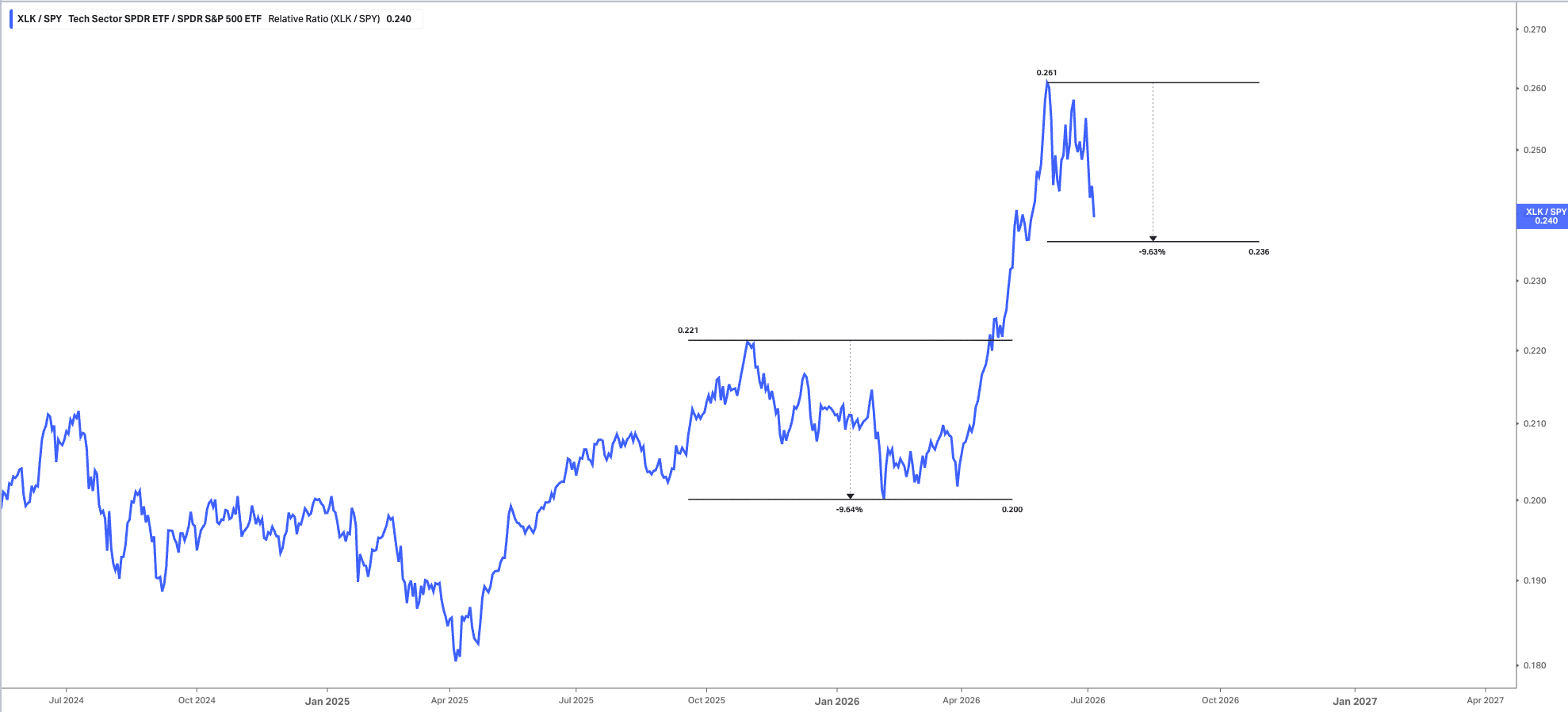
Let me be clear about what I’m not saying: I’m not calling the death of semiconductors. I still own plenty of chips, and this looks like a healthy correction, not a collapse. But it did send me hunting for where the next opportunity is quietly setting up — and that hunt started with a research report.
What a 65-page Jefferies report actually says
I spent a recent morning grinding through a 65-page research report from Jefferies titled “What’s Ailing Software.” It nearly broke my brain — but the payoff was worth it. Their bottom line, and I love how blunt it is: “software is not dead, weak software is.”
Their best visual is what they call the software iceberg. Above the waterline is the stuff AI can copy easily — the interface, the chat window, the surface-level features. But below the waterline sits everything that actually makes enterprise software impossible to rip out: the data moats, the switching costs, the compliance and governance, the decades of institutional knowledge baked into these systems. AI can mimic the tip. It can’t easily replicate the 90% underneath.
My favorite detail? The two AI companies everyone is terrified of — OpenAI and Anthropic — are themselves customers of the very software they’re supposedly killing. Snowflake, ServiceNow, Salesforce, Datadog… the so-called boogeymen run their own businesses on it.
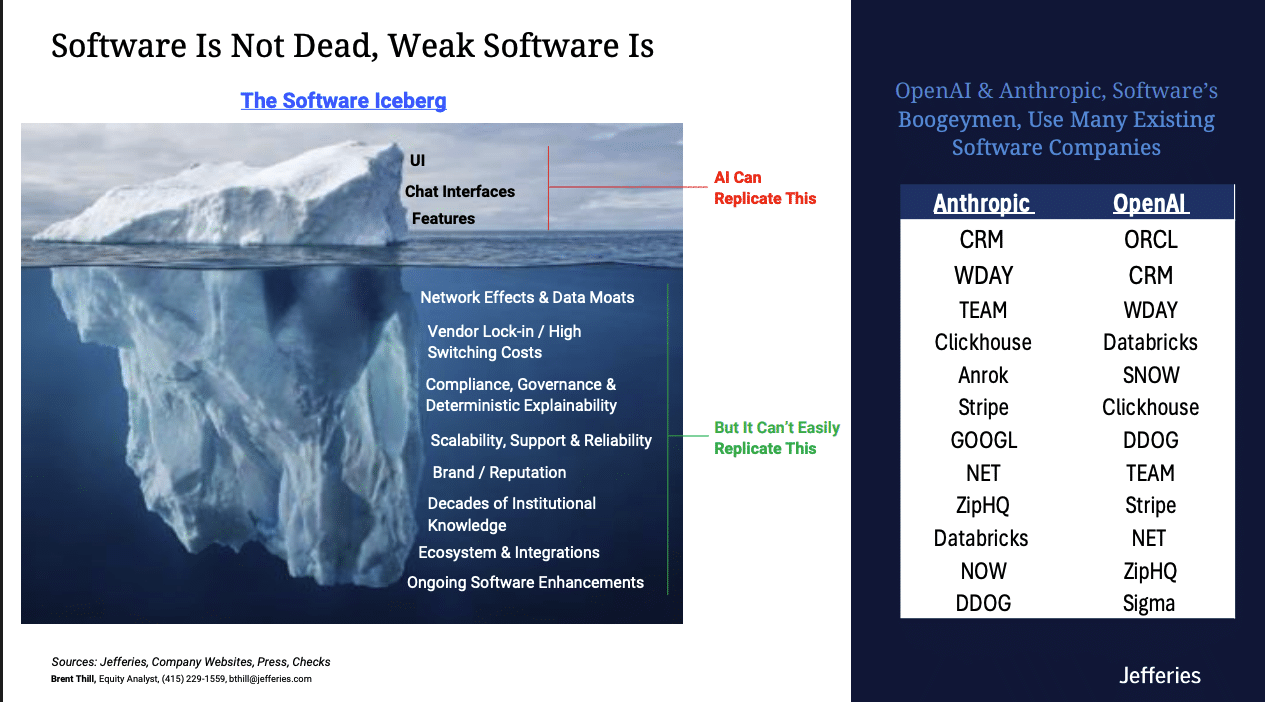
Source: Jefferies, “What’s Ailing Software.”
The chart that caught my eye
Narratives are one thing. Price is another. Below is the ratio of software to semiconductors — the iShares software ETF (IGV) divided by the VanEck semiconductor ETF (SMH). It fell for more than a year straight as money crowded into chips. Then last month it bottomed near 0.13 and broke back above its downtrend line.
That’s a reversal starting to develop. And when a trade this one-sided finally cracks, I pay attention.

Where I’m actually positioned — and what I’m weighing
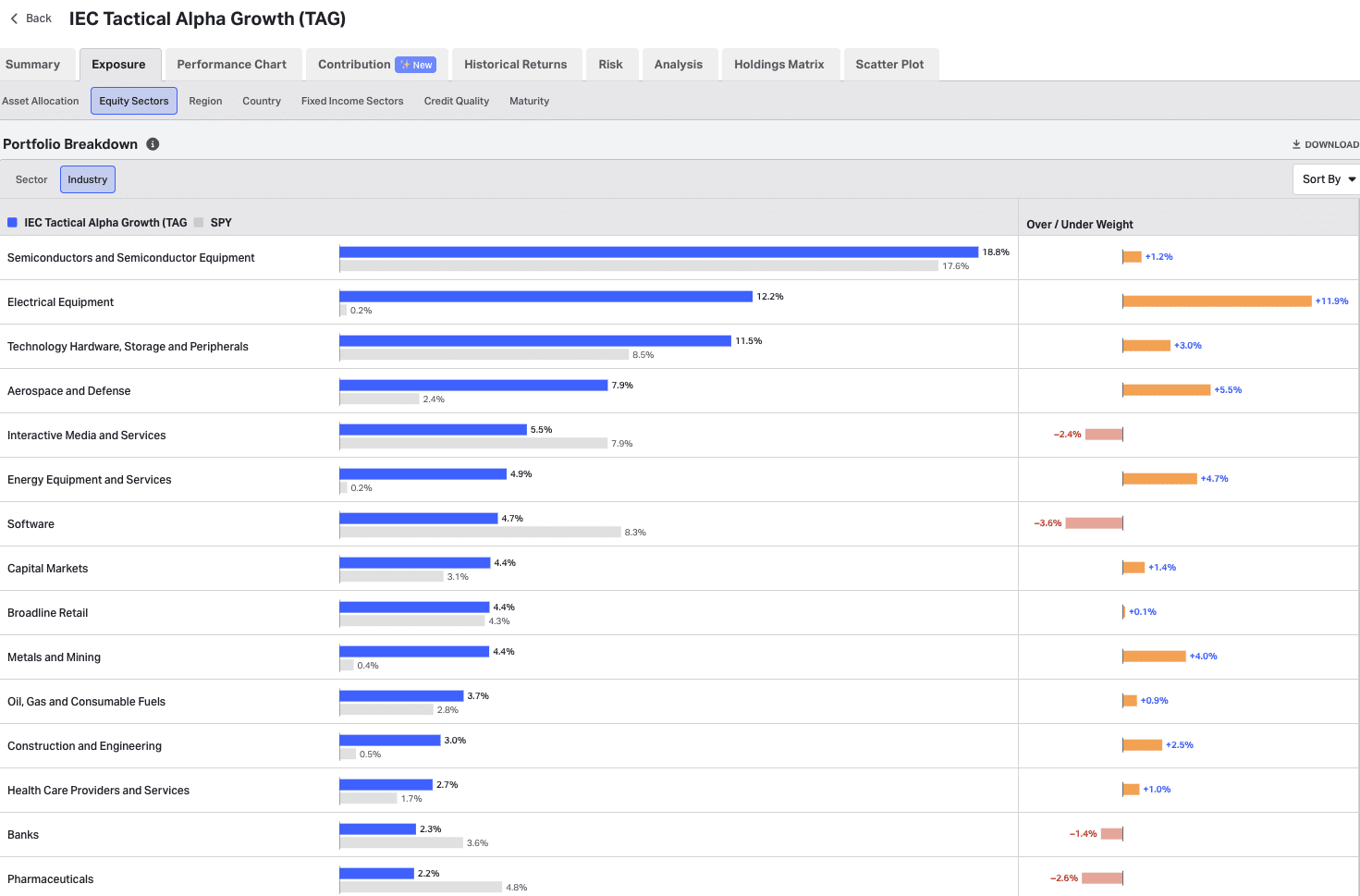
I don’t just write about this stuff; I manage real money against it. So here’s the honest picture of my Tactical Alpha Growth portfolio right now: I’m overweight semiconductors at 18.8%, and notably underweight software at just 4.7% — versus the market’s 8.3%.
That was the right call for a good while. But with the charts turning and the fundamental story holding up, I’m now weighing a tactical shift: trimming some of that semiconductor strength and carving into software. I won’t lay out the whole playbook here — that part is for my subscribers — but I’ll show you one name that’s squarely on my radar.
The name I’m watching: Snowflake
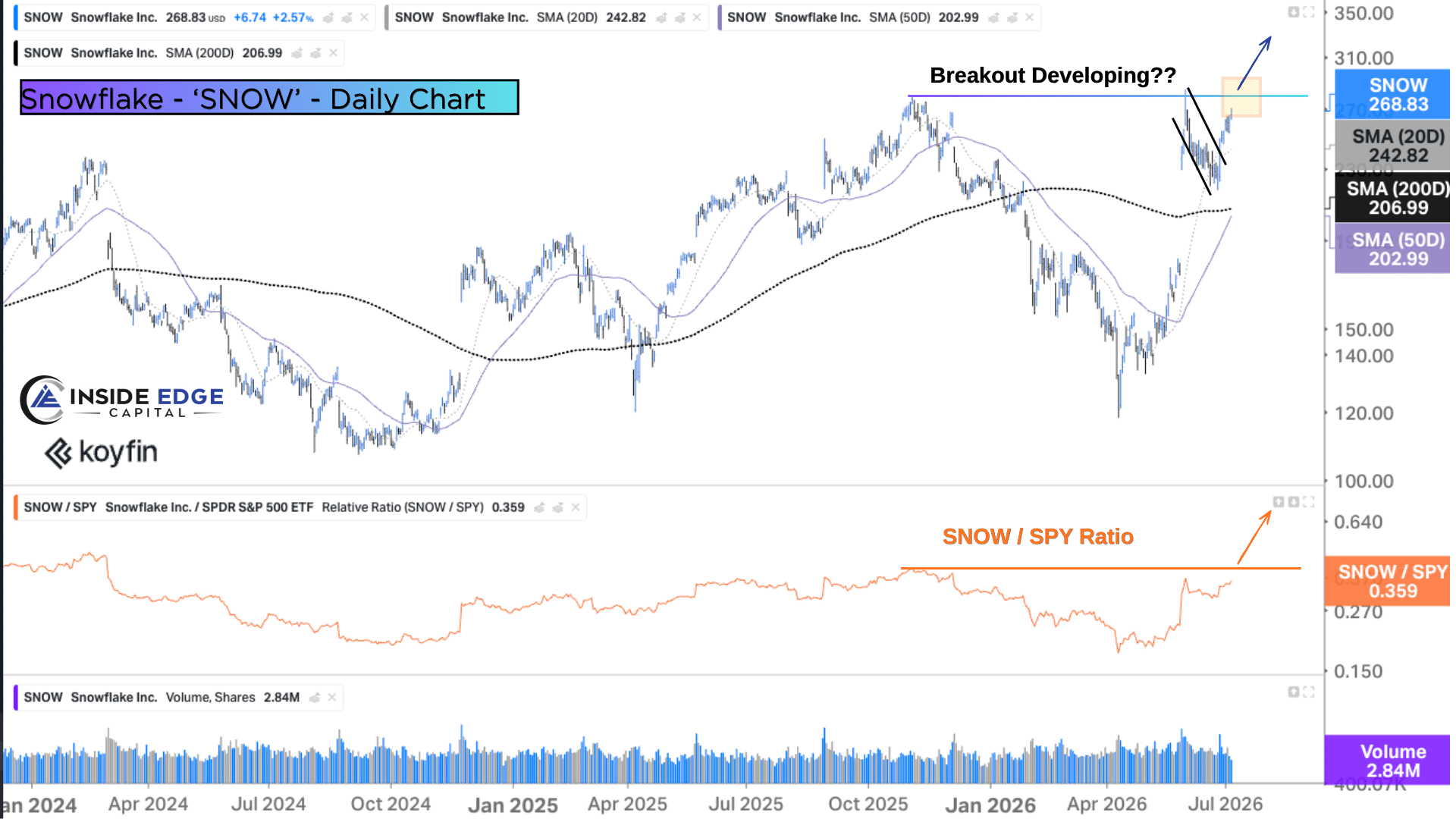
Snowflake (SNOW) has been the clear relative-strength leader in software — the one stock that never got the memo about the SaaS-pocalypse. While the rest of the group got crushed, it barely flinched, and it’s now pushing back up toward its old highs.
Why is it different? Simple: Snowflake gets paid when AI runs, not when people log in. It charges for the data and AI workloads its customers churn through — pure consumption. So the AI boom that scares seat-based software companies is a straight-up tailwind here. Last quarter it grew product revenue about 34%, blew past its own guidance, posted a record operating margin, and announced a partnership with OpenAI. Jefferies has it as a top pick. And the chart, as you can see, agrees.
Here’s the part I love
This is the fun part of my job — spotting the moment the crowd has leaned too far one way, and calmly leaning the other.
So I just published a deeper breakdown for our Inside Edge investors, digging into two of the key software names that came out of that Jefferies report. Snowflake is the first — the demonstrated relative-strength leader you just saw, the one that never got crushed in the sell-off.
The second is the one I can’t stop thinking about. It’s a beaten-down software heavyweight — down roughly 50% — sitting right on top of major technical chart support, trading at a genuinely attractive valuation, and, in my view, completely misunderstood in all the SaaS-pocalypse panic. It’s a potential “catch-up” trade: buying the laggard before it closes the gap on the leaders. Now, I’ll be honest — that’s not usually my style. I’m a relative-strength guy at heart; I like to buy what’s already working. But this setup is interesting enough that I made an exception and laid out the full case for our investors.
If you want the whole picture — the name, the chart levels, the valuation work, and exactly how I’m thinking about the tactical shift in the portfolio — come find me.
→ Inside Edge Capital: insideedgecapital.com/ Active portfolio management, financial planning, and market updates like this one for real investors.
— Todd Gordon, Founder, Inside Edge Capital, LLC
Disclosures: This post is for informational and educational purposes only and is not investment advice or a recommendation to buy or sell any security. Todd Gordon does not currently own SNOW personally or for clients of Inside Edge Capital, LLC, though positions may change at any time. Investing involves risk, including the possible loss of principal. Past performance is not indicative of future results. Consult your own financial advisor before making investment decisions. Charts: Koyfin. Research referenced: Jefferies.